Why Tendon and Heel Pain Can Linger
Tendons connect muscle to bone, and they carry large loads with relatively limited blood supply. When a tendon or its attachment to bone is irritated repeatedly, as can happen with running, jumping, repetitive work tasks, or a sudden increase in activity, the tissue can develop a slow, stubborn pain problem. Heel pain at the base of the foot (often called plantar fasciitis) and Achilles tendon pain are two familiar examples, and autumn sports seasons and new exercise routines tend to bring more of these questions into our Mobile, Alabama office.
Many of these conditions improve with time, activity changes, strengthening, and supportive care. When they do not, patients often ask about shockwave therapy. This article explains what it is and what a visit typically involves. It is educational information, not a recommendation for any one person.
What Shockwave Therapy Is
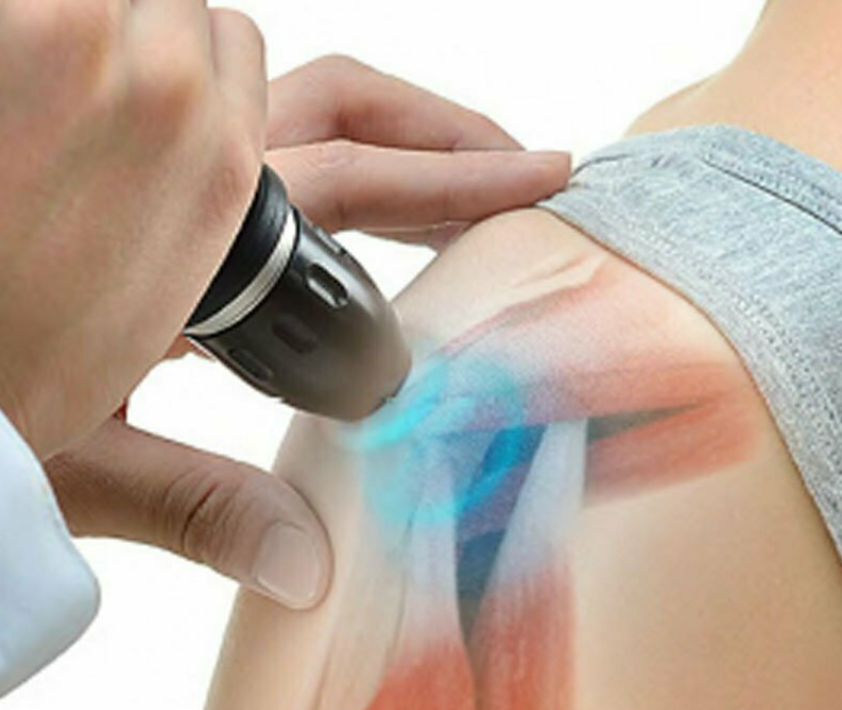
Extracorporeal shockwave therapy (ESWT) uses brief acoustic pressure pulses delivered through the skin by a handheld applicator. The pulses travel into the targeted tissue. Researchers have proposed several ways this may influence a painful area, including effects on local pain signaling, blood flow, and the tissue repair process. The exact mechanisms are still being studied, and the amount of supporting research differs from one condition to another.
Radial and Focused Delivery
At Optimum Chiropractic Care we use the Duolith SD1 Ultra, which offers two delivery modes. Radial waves spread across a broader, more superficial area and are often chosen for larger regions of tight or tender tissue. Focused waves are directed to a specific depth, which can be useful when the area of concern sits closer to the bone or deeper within a tendon attachment. Choosing between them depends on where the problem is and what the examination shows.
Conditions It Is Commonly Used For
Shockwave therapy is most often discussed for chronic problems in tendons and their attachments, meaning problems that have persisted despite basic conservative measures. Examples include:
- Plantar fasciitis and heel pain
- Achilles and patellar tendon pain
- Lateral elbow tendon pain (often called tennis elbow)
- Certain shoulder tendon problems, including calcific tendinitis
- Hip-region tendon and bursa-related pain
Research results vary by condition, and not every patient responds the same way. A careful examination is what determines whether a heel or tendon complaint is a good fit for this approach or whether another explanation should be considered first.
Worth knowing: Heel, hip, and shoulder pain can sometimes have causes that are not in the tendon at all, such as nerve irritation that originates in the spine. Sorting this out is part of a thorough evaluation, which is why the first visit focuses on history and examination before any treatment is chosen.
What a Session Typically Involves
A first visit begins with your history, a physical examination, and a discussion of your goals. If treatment is appropriate, a typical shockwave session looks like this:
- The treatment area is identified by palpation and by what you describe as most tender.
- Coupling gel is applied so the pulses transmit effectively through the skin.
- The applicator is moved over the area while pulses are delivered. Intensity is adjusted to what you can tolerate.
- The session usually takes about 15 to 20 minutes, and most people go about their day afterward.
Treatment is commonly given as a short series, often spaced about a week apart, with your response reassessed along the way. Some people notice mild soreness or redness afterward. Your clinician will talk through activity modifications and any supportive measures, such as stretching or strengthening, that may be paired with the sessions.
Who May Not Be a Candidate
Shockwave therapy is not appropriate for everyone. Pregnancy, active infection in the area, certain bleeding conditions or blood-thinning medication, and some implanted devices or tissue concerns near the treatment site are examples of situations where it may be avoided or approached with caution. This is one reason a screening history comes first.
Where Dr. Moore's Training Fits
Dr. Moore is a Fellow in Primary Spine Care (FPSC) and has completed radiology mini-fellowships through SUNY Jacobs in neuroradiology, advanced MRI of the spine, and musculoskeletal radiology. In practical terms, that background informs how he thinks through a painful heel, hip, or shoulder: considering whether the source is local tissue, the spine, or a combination, and deciding when imaging would add useful information. You can read more about his background on the About page. Patients who are recovering from a collision or other trauma may also find the whiplash and trauma page helpful, since a recent injury calls for a different evaluation than a long-standing overuse problem.
Common Questions
What does shockwave therapy feel like?
Most people describe a tapping or pulsing sensation over the treated area. Sessions can be uncomfortable, particularly over tender tissue, and the intensity is adjusted to what a patient can tolerate. Soreness for a day or two afterward is not unusual.
How many sessions are typically used?
Protocols vary by condition and by the individual. A common pattern is a short series of sessions spaced about a week apart, with progress reassessed along the way. Your clinician will explain the plan for your situation, and no particular result can be predicted in advance.
Is shockwave therapy right for everyone?
No. It is generally not used over certain areas or in certain circumstances, such as pregnancy, over active infection, or in people with some bleeding disorders or implanted devices near the treatment site. A history and examination come first so that appropriate candidates are identified.
Does a heel or tendon problem need imaging first?
Not always, but imaging is sometimes helpful when the cause of pain is unclear, when there was a significant injury, or when symptoms do not follow the expected pattern. Your clinician will recommend studies only when they are likely to change the plan of care.
If you are living with heel or tendon pain in the Mobile area and would like to understand your options, you are welcome to request an evaluation.